
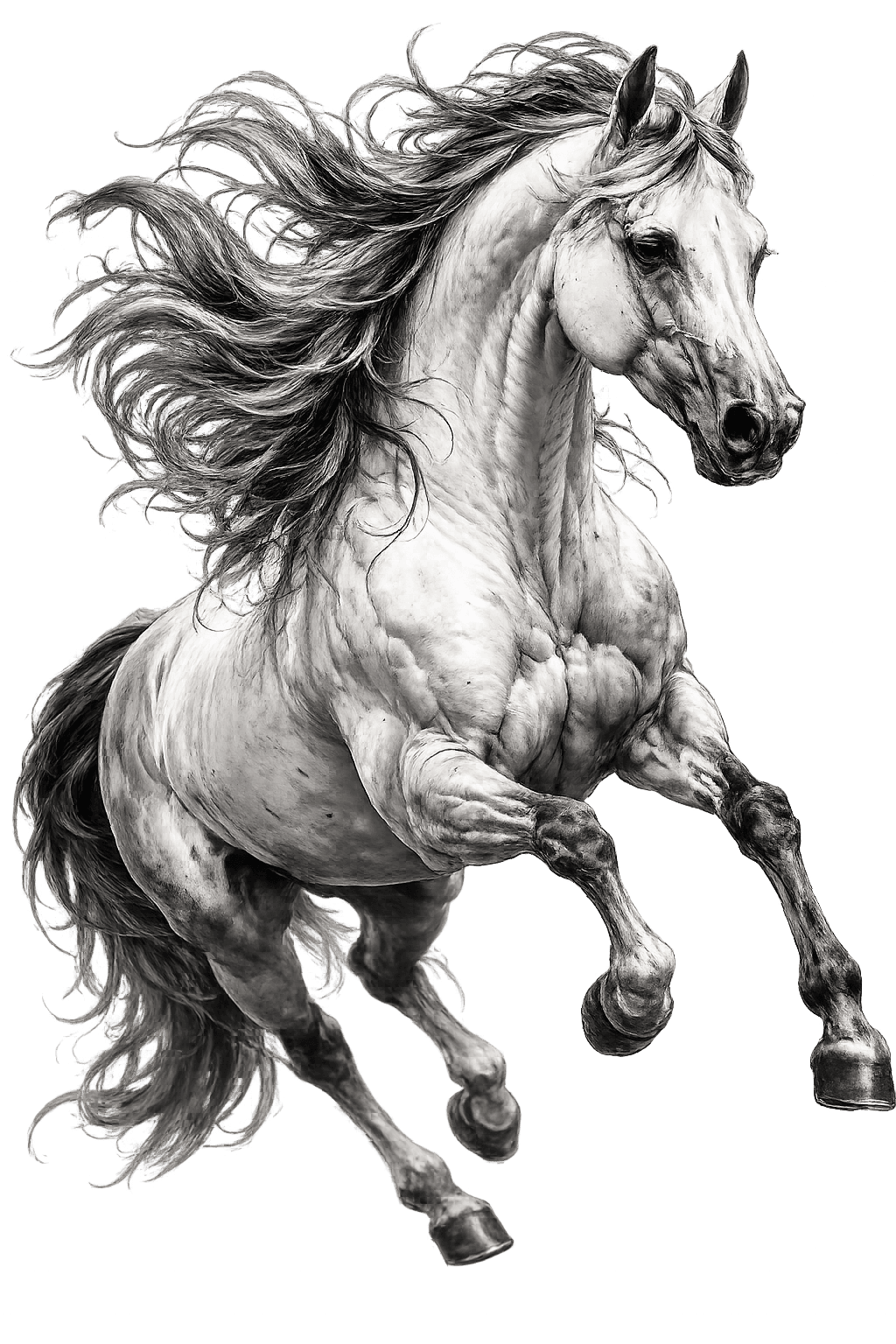
Heritage · Horsemanship · Jordan
A Golden
Lineage
The story of Jordan's horses — from the neighing of steeds in Nabataean battles, to the saddles of Great Arab Revolt riders, to the Royal Stables today.
— The Ancient Era
A Golden Lineage — Jordan's Horses in History
Historians have not settled on the original homeland of the horse, but theoretically trace it to Central Asia, from where it spread across the world in three great waves. The lineage that settled on the coasts of Greece carries the ancestry of most breeds today, and since then the horse has been a companion to humanity wherever it settled.
Not far from the heart of ancient civilisation, our Nabataean Jordanian ancestors sat atop the pyramid of the greatest cultures of history — they tamed the horse and kept it, launching a long era between Jordanians and horses that has endured to today. The mythology of the southern wind kneaded by the gods, from whose womb the horse was born, gave rise to its title: 'Son of the Wind'.
The seven of ten Decapolis cities in Jordan — during the period of Roman-era autonomy — completed the domestication of the horse and harnessed it in building Jordan's historic civilisation, ushering an era of chivalry and glory. On that foundation the descendants continued the love story with this noble creature, forming a rich vocabulary and lexicon around the horse that sets Jordanians apart.
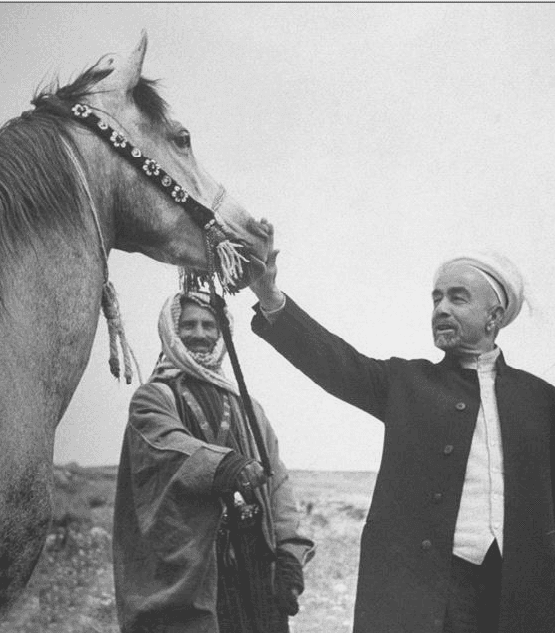
— Horses Against Tyranny
Horses in the Age of Riders
Jordanian tribal riders and their horses facing four centuries of Ottoman occupation.
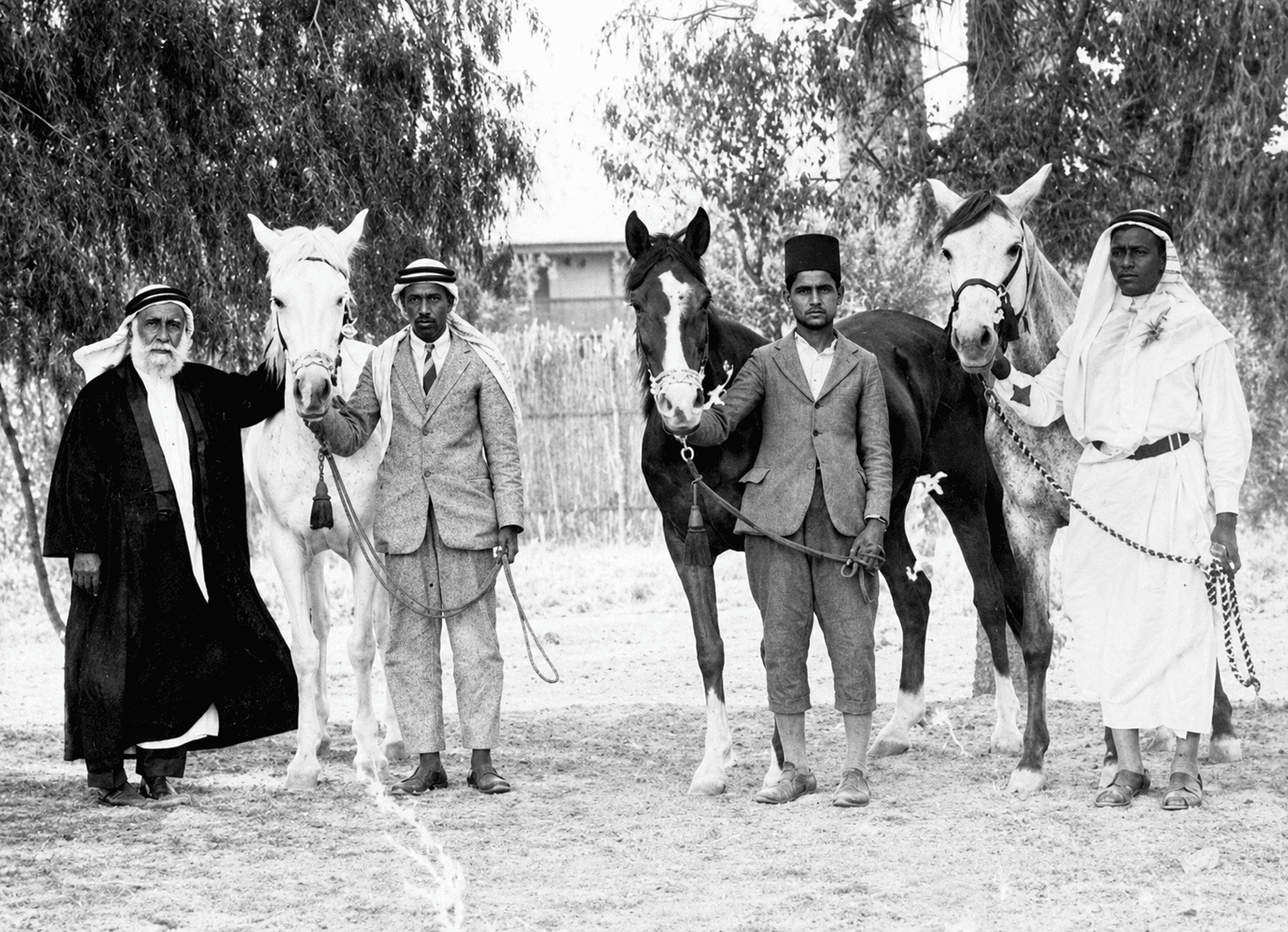
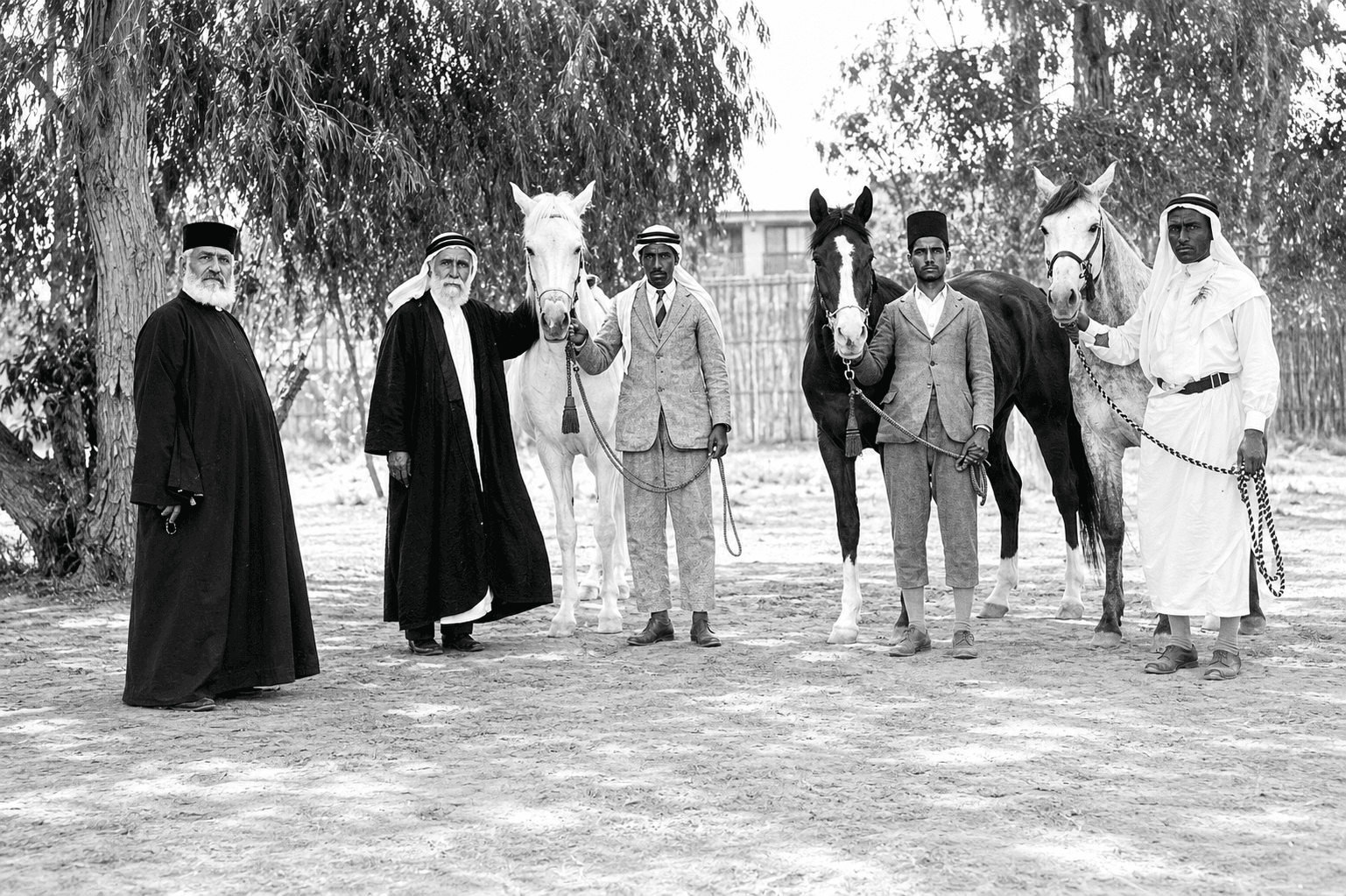
The history of horses in Jordan passed through phases of brilliance and eclipse, and preserving the heritage required adaptation and flexibility. The ancestors transitioned from using horses in organised armies to the era of tribal riders — through swift cavalry manoeuvres — that adapted to face the Ottoman occupation.
The reputation of the purebred Jordanian horse spread far because of the steadfastness of Jordanians in their battles — some 53 revolts against Ottoman occupation over 400 years — prompting many glory-seeking armies to send research expeditions to acquire Jordanian horse bloodlines.
Jordanian horses played a decisive role as tribal riders mounted them across 20 major battlefronts in the Great Arab Revolt, leading liberation operations from Aqaba in the south all the way to entering Damascus — extending a hand of solidarity to free the lands of neighbours and kin.
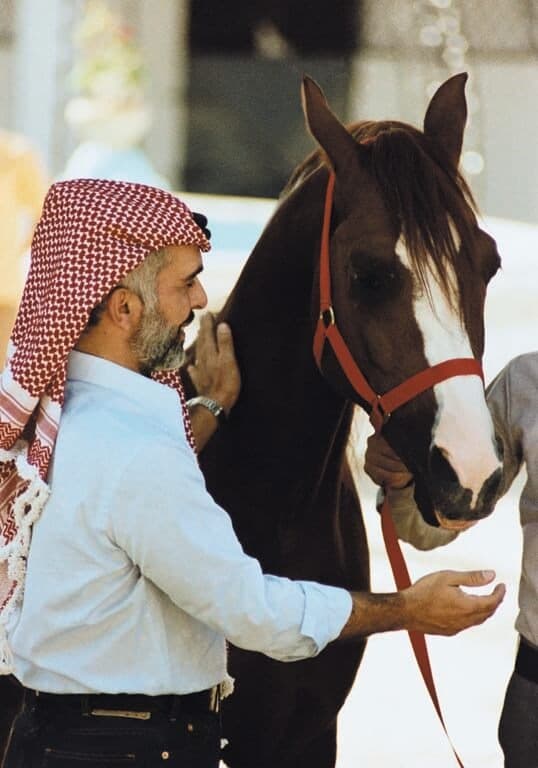
The International Quest — Jordanian Horses in World Capitals
The English acquired a mare from the Bani Sakhr tribe bloodline, presented as a gift to King George III
The Bábolna Stables acquired approximately twenty Jordanian horses
The Shcherbatov and Stroganov Stables obtained the Jordanian Kuhaylan bloodline
Poland obtained the rein of the famous Jordanian Kuhaylan al-Ajuz stallion
Source: Princess Alia bint Al Hussein & Peter Upton, The Story of the Arabian Horse in Jordan, Al-Madinah Publishing, 2011
— Milestones of History
The Jordanian Equestrian Journey
Five milestones that tell the story of horsemanship in Jordan — from ancient Arab roots to today's international arena.
Arab & National Roots
Jordan's equestrian roots stretch deep into history — from the ancient Arab civilizations of the Nabataeans and Ghassanids to the tribal horsemen who played a pivotal role in the Great Arab Revolt, riding northward from Aqaba to liberate their land.
The Royal Racing Club
Founded under the patronage of the late King Hussein bin Talal in Marka, it became the third oldest horse racing track in the Middle East. The club was later relocated to Thaneeb, where races continue to this day.
The Hashemite Royal Stables
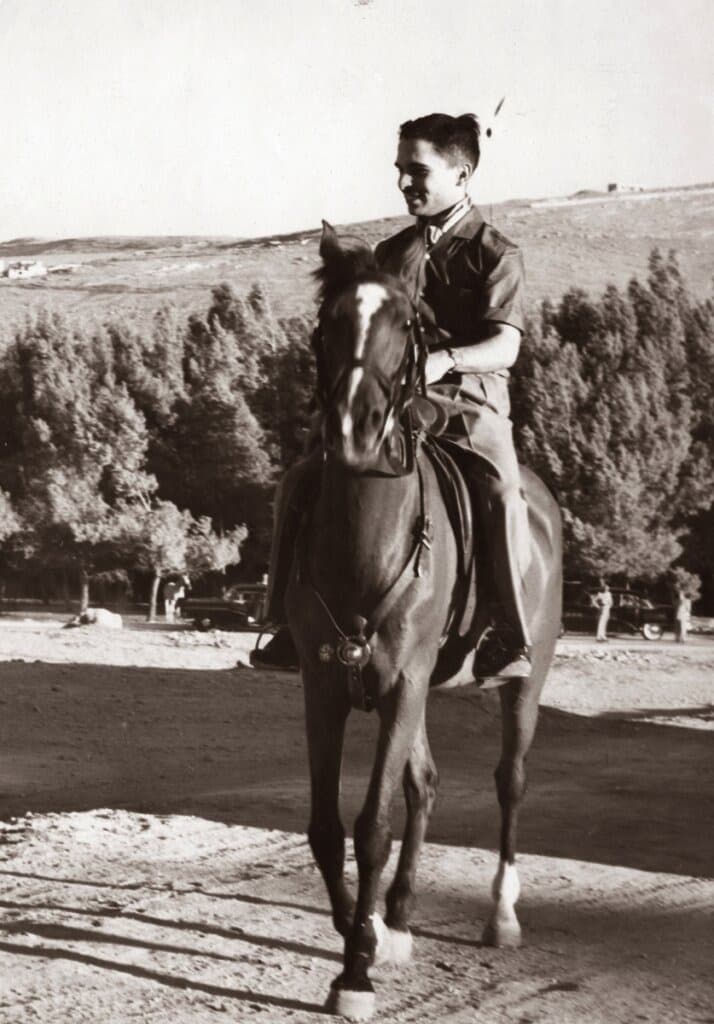
The Royal Stables represent a distinguished chapter in Jordanian heritage, housing the rarest Arabian bloodlines carefully preserved by the Hashemites across generations — forming the nucleus of Jordanian excellence in regional and international equestrian sport.
The Royal Jordanian Equestrian Federation
Under the leadership of HRH Princess Alia bint Al-Hussein, equestrian sport was revived in its modern organised form — encompassing showjumping, endurance racing, and classical polo — propelling Jordanian equestrianism onto the international stage.
Equestrian Sport Today
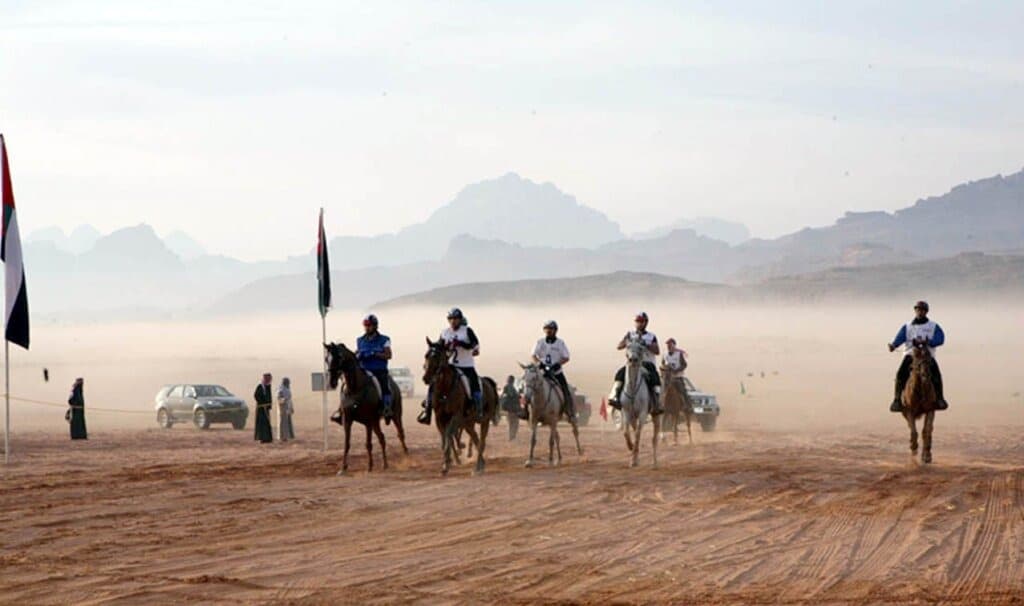
Today, local and international Arabian horse championships are held regularly at world-class venues such as the Amman Equestrian Center. Jordan continues its presence in international competitions alongside a sustained commitment to developing this noble sport.
— The Hashemite Royal Stables
The Royal Stables Gallery
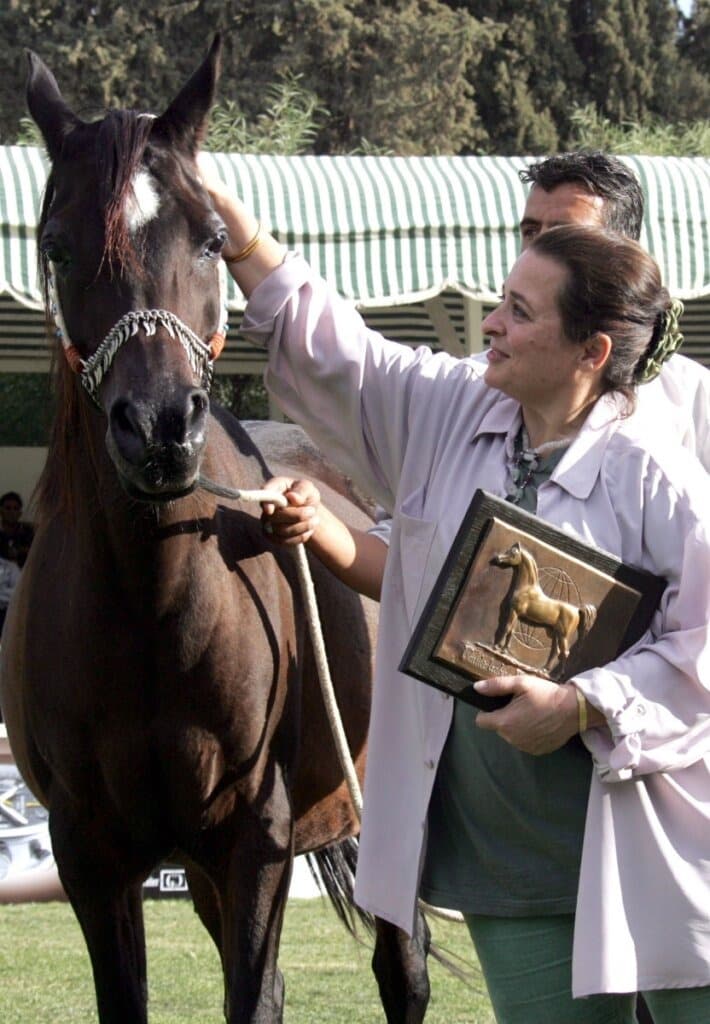
Images from the Hashemite Royal Stables — where purebred bloodlines are preserved and cared for at the highest standards.
12 photographs from the Hashemite Royal Stables — click to expand
الإسطبلات الملكية — الأردن
خيول أصيلة في الإسطبلات الملكية
الإسطبلات الملكية الهاشمية
فرس أصيلة في الاسطبلات الملكية
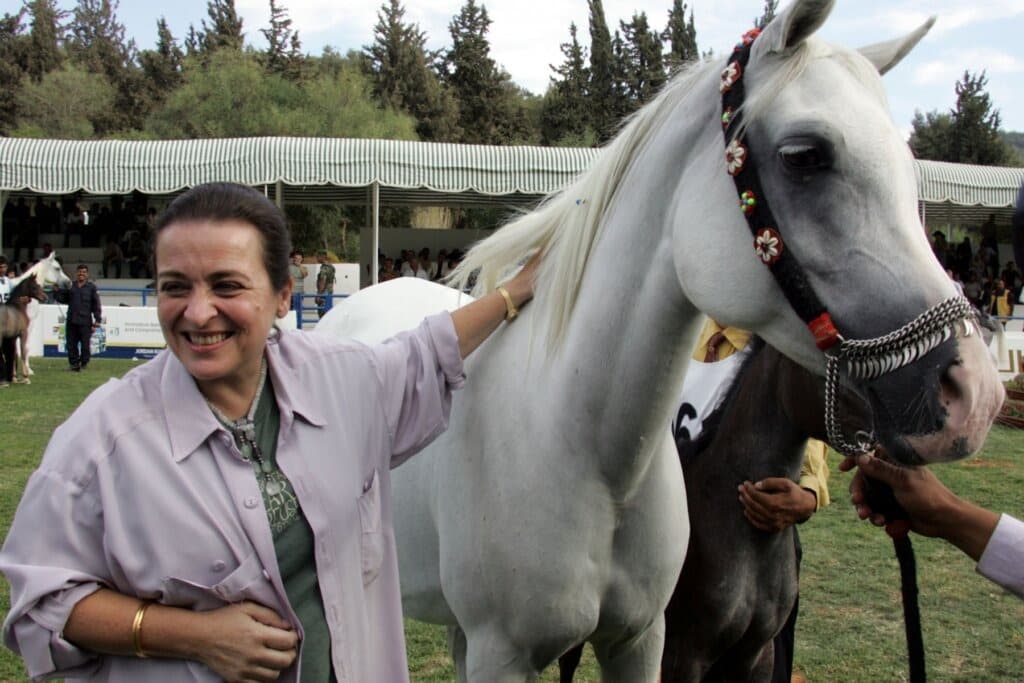
الإسطبلات الملكية الأردنية
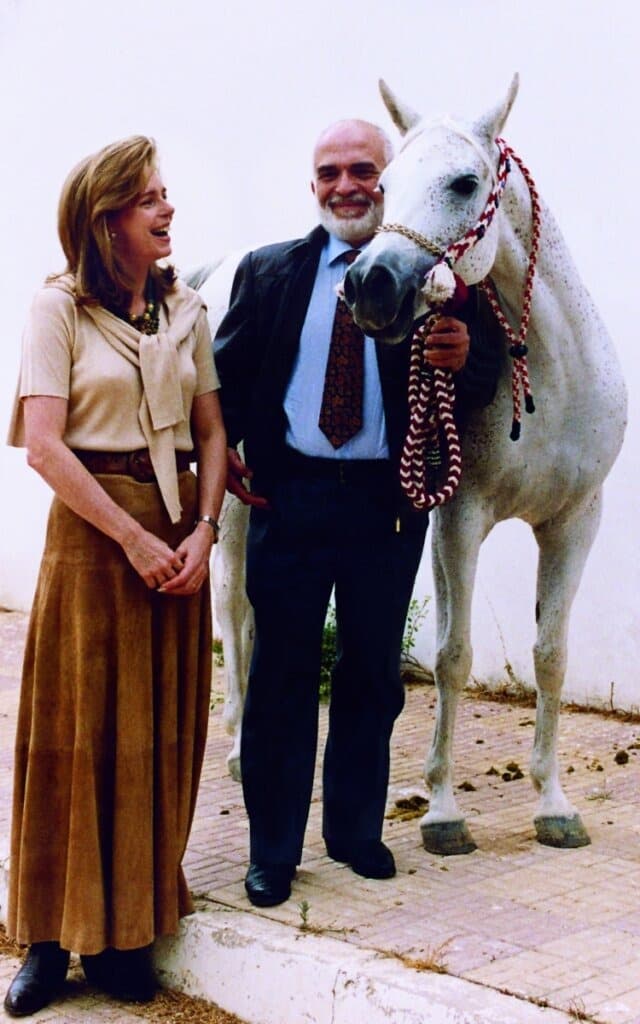
خيل أصيلة من الإسطبلات الملكية
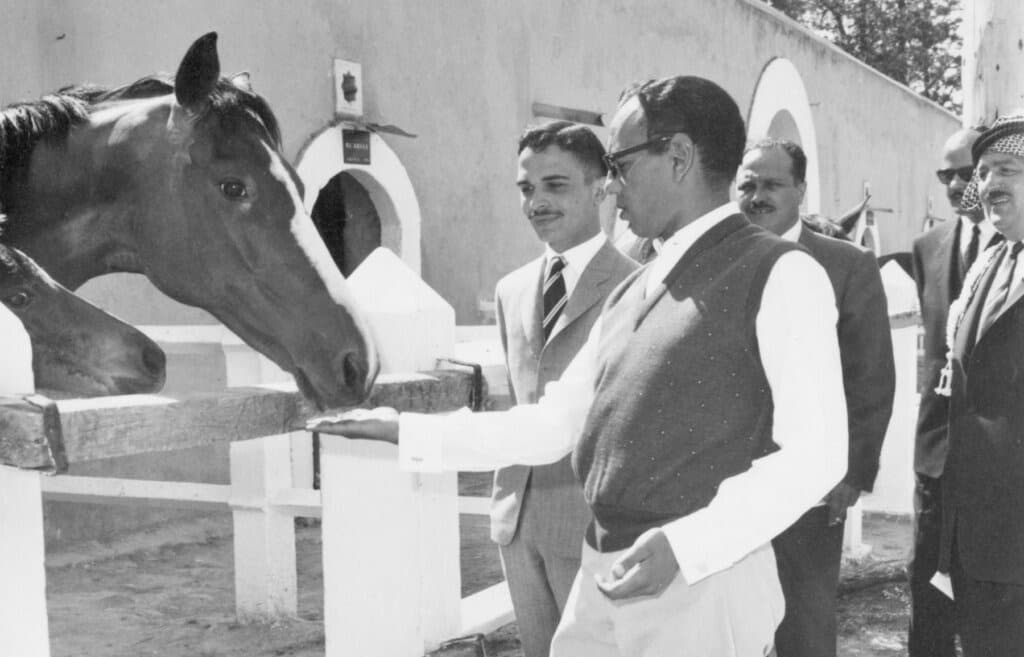
الإسطبلات الملكية الهاشمية
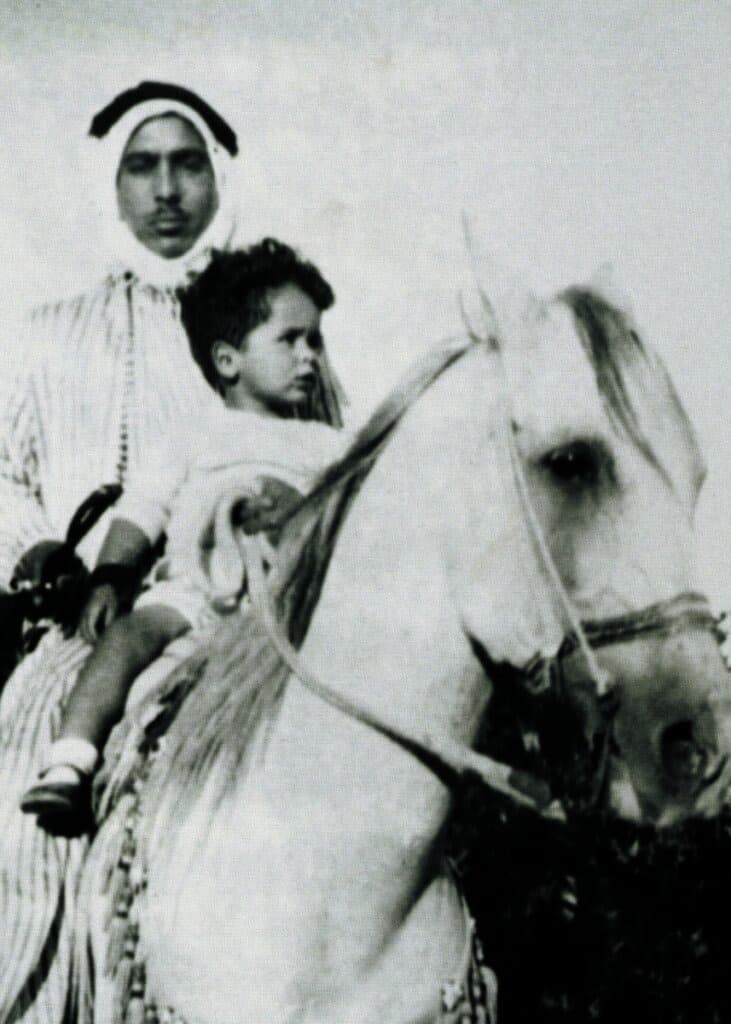
فرس أردنية أصيلة
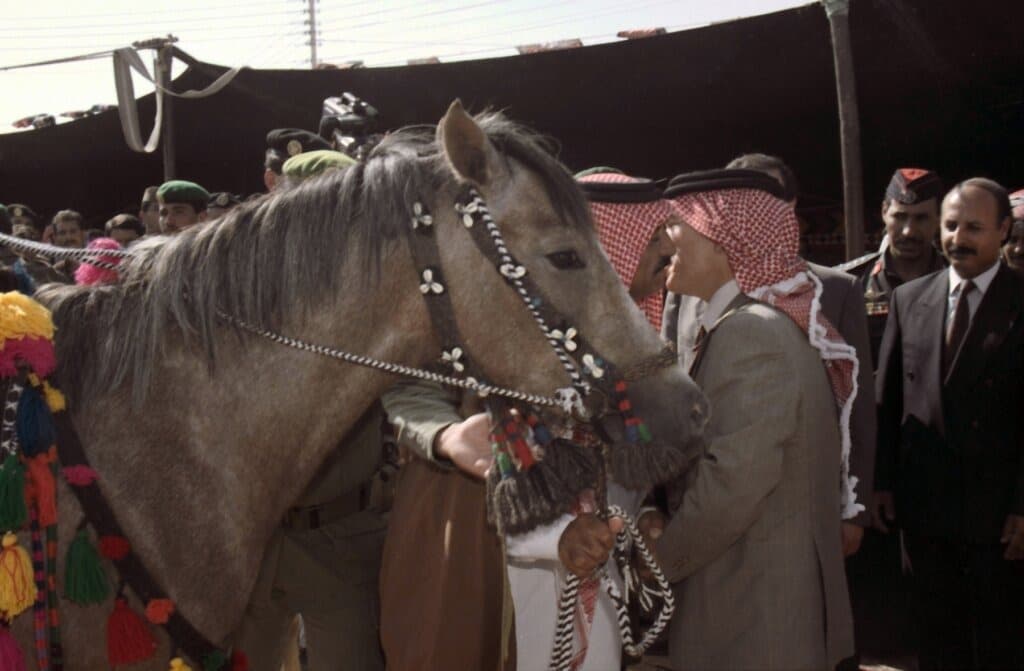
الإسطبلات الملكية الأردنية
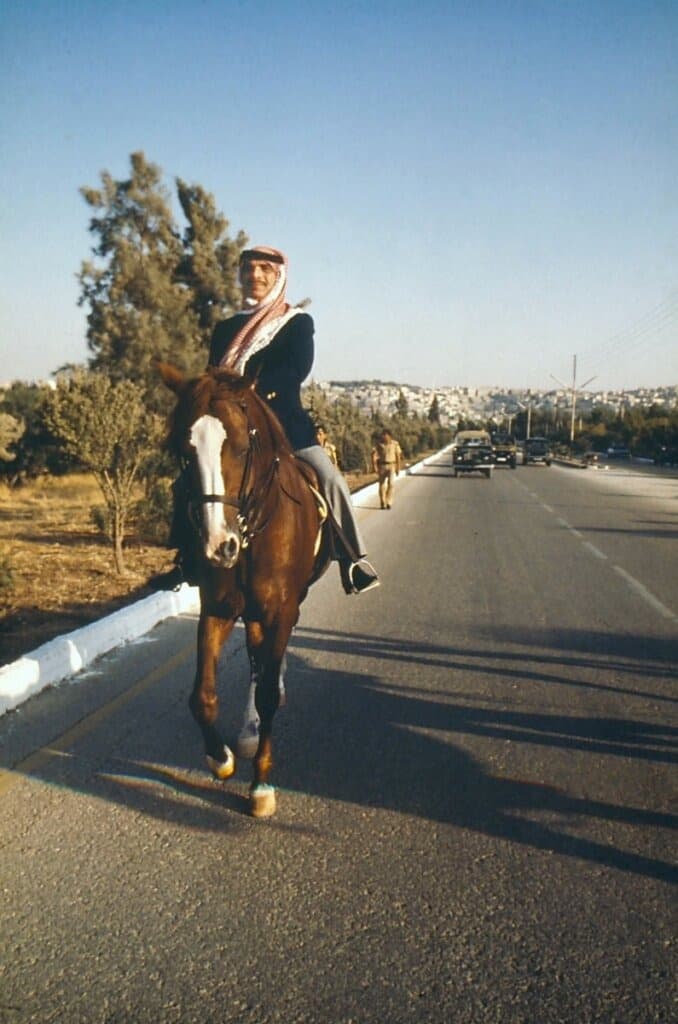
فرس أصيلة في الإسطبلات الملكية
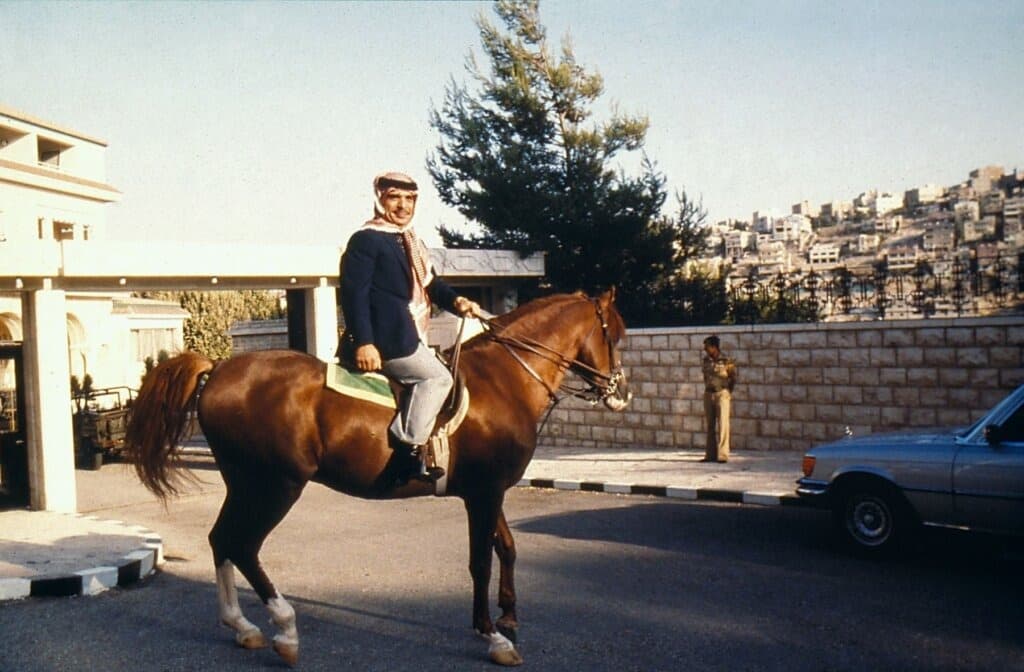
الإسطبلات الملكية — ورعاية الخيل
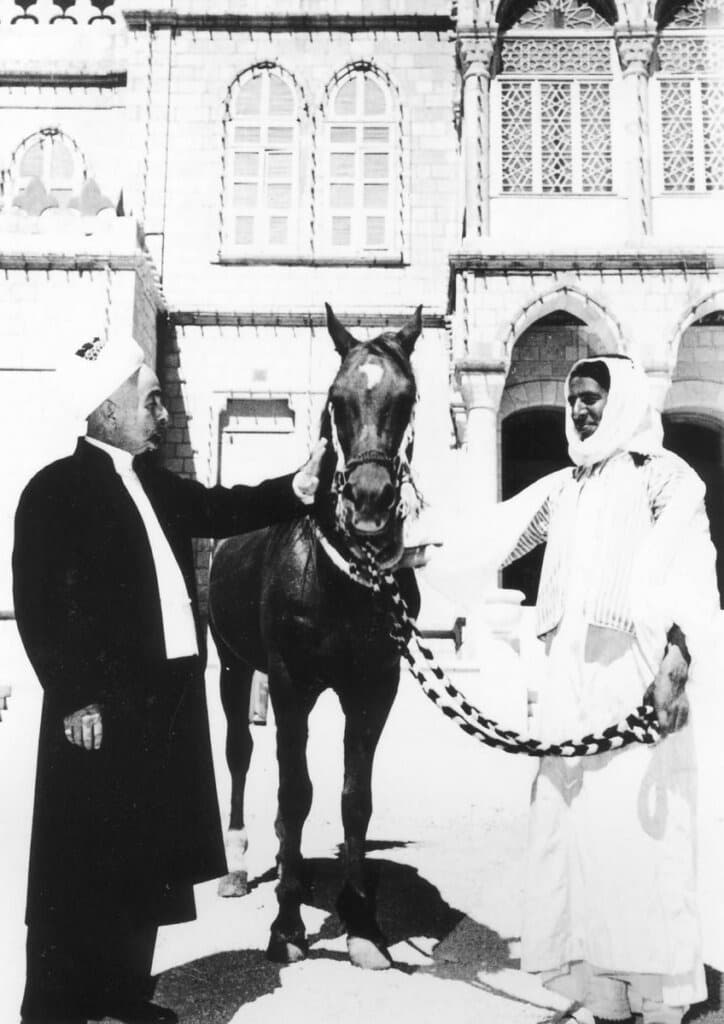
خيل أردنية في الإسطبلات الملكية
All the good that exists on earth is tied to the forelock of the horse until the Day of Judgment.
— Traits of the Purebred Jordanian Horse
Beauty · Agility · Loyalty
Jordanian horses are distinguished by a triad of beauty, agility, and loyalty — met by Jordanians with a triad of nobility, chivalry, and authenticity.
Broad Chest
Gives the lungs greater capacity to support speed and endurance in racing and battle.
Wide Clear Eyes
Add striking beauty while granting panoramic vision over the surrounding terrain.
Fine Proportioned Head
Tends toward fine proportions — a recognised mark of nobility in classical horse literature.
Balanced Stance
Adds clear beauty to the form and reflects the natural health and balance of the horse.
Wide Nostrils
Facilitate breathing during fast gallops, matching the exceptional lung capacity.
Long Elegant Tail
Completes the visual grace and is among the signs of pure lineage in the Jordanian heritage.
Smooth Coat
Indicative of the nobility of the bloodline and how the horse was honoured historically in Jordan.
Long Arched Neck
A symbol of beauty in Jordanian lyric poetry and celebrated in the canon of Arabian horse verse.
Jordan's Champion Horses
Halil Ramadan
The celebrated Jordanian horse, multiple world champion in speed, agility and beauty competitions — a model of Jordanian genetic excellence on the international stage.
Hilal Al-Eid
The purebred Jordanian horse and a model of Jordanian horse excellence in global speed, agility and beauty competitions — carrying in its veins the heritage of centuries of pure breeding.
References & Sources
- 01Princess Alia bint Al Hussein & Peter Upton, The Story of the Arabian Horse in Jordan, Al-Madinah Publishing, 2011.
- 02King Abdullah I bin Al Hussein, Answer to the Inquirer about Purebred Horses, Ministry of Culture, 2011.
- 03Rux bin Zaid Al-Azizi, The Horse in the Life of Jordanians.
- 04A series of field interviews with researchers and historians by the Jordan Heritage team, 2016.
This heritage lives on in Jordan's stables today. Explore the finest equestrian establishments in the Kingdom.